
For decades, Las Vegas residencies meant one thing: legacy pop acts and aging classic rock icons playing to crowds of tourists. Celine Dion, Elton John, Rod Stewart. Safe, comfortable, predictable. But something has been shifting on the Strip, and if you follow heavy music at all, you have probably noticed it.
Rock and metal are moving into Vegas in a serious way — and not just as an occasional detour. The city is actively courting the kind of acts that would have seemed completely out of place there ten years ago.
The Sphere Changes Everything
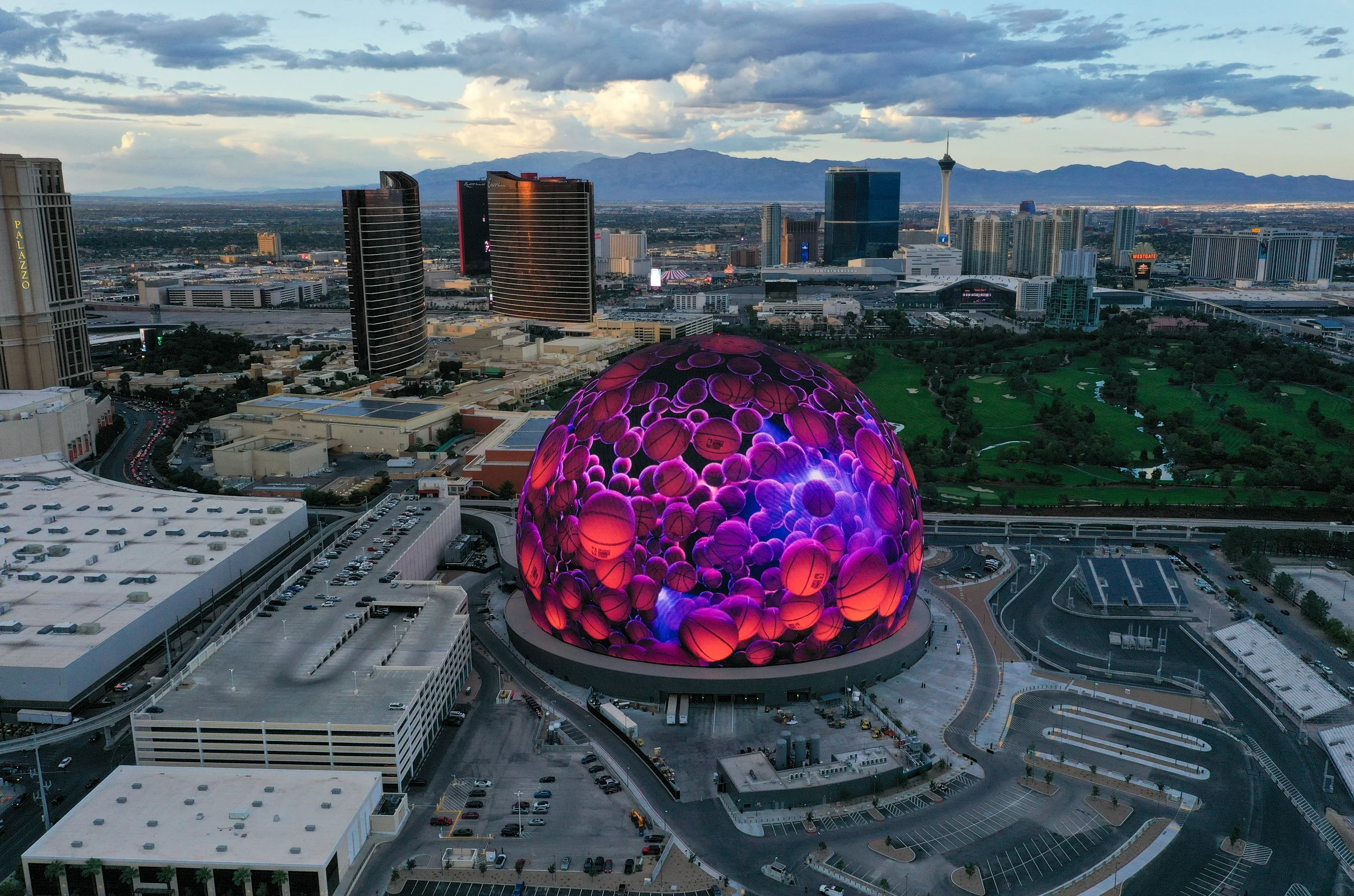
When the Sphere opened in Las Vegas, it was immediately clear this was not just another oversized venue. The technology alone — a fully immersive wraparound screen, spatial audio that can apparently rattle your ribcage — was built for spectacle on a scale that few artists had attempted before.
According to Rolling Stone, acts including Metallica, Tool, and Roger Waters have all been linked to the Sphere in various capacities, whether as confirmed bookings or serious discussions. For anyone who grew up on those bands, the idea of seeing them in a venue that wraps an entire visual world around you is genuinely something different. It is not nostalgia tourism. It is a full sensory event built around the music.
The Sphere has given Las Vegas a credible answer to a question the city has struggled with for years: how do you attract a younger, music-first crowd who would rather spend a weekend at a festival than at a blackjack table? The answer, apparently, is to build something so technically ambitious that the artists themselves want to perform there.
Casino Residencies Are Going Rock
Beyond the Sphere, the traditional casino residency model is also evolving. The Strip recently signed a legendary rock act for a 2026 residency — another sign that the venues are reading where the audience is going and adjusting accordingly.
This matters because casino residencies are not small commitments. They run for months, sometimes years. When a casino backs a rock act with that level of investment, it signals genuine confidence that the audience is there and that the overlap between rock fans and Las Vegas visitors is bigger than the industry previously assumed.
It also changes the economic picture for artists. A residency means a fixed stage, a controlled environment, predictable revenue, and the ability to build a show that touring simply does not allow. For a band that wants to push production values without destroying a tour budget, Las Vegas is starting to make real sense.
Festival Season Is Spilling Into Vegas
The connection between heavy music and Las Vegas has another thread running through it: festival culture. Coachella this year featured a string of heavy metal and hard rock artists across its stages, with footage circulating that showed crowds fully engaged rather than treating the genre as a side attraction.
The pattern is consistent. Rock and metal audiences travel. They plan around events. They will go to a desert festival in California or a residency in Nevada specifically for the music. Las Vegas, with its infrastructure for large-scale entertainment and its position as a hub for exactly that kind of destination-driven experience, is well positioned to capture more of that energy.
Vegas as a Full Entertainment Ecosystem
What Las Vegas has always understood — and what the rest of the entertainment industry is catching up to — is that people do not go there for just one thing. A weekend in Vegas is a package: shows, dining, nightlife, gaming. The city has built an entire economy around the idea that entertainment and leisure can stack on top of each other.
For rock fans making the trip, that means the concert is often the anchor but not the only attraction. The nights extend well past the encore. Between shows, fans are looking for ways to keep the energy going — and for a lot of people that means exploring the broader entertainment options Vegas culture has brought into the mainstream, including online gaming. Whether you are waiting for doors to open or killing time before the next set, knowing the top 20 slot games that are trending right now has become as much a part of the pre-show ritual as checking the setlist.
The lines between music tourism and the rest of Vegas's offering are blurring, and that is probably good for everyone involved.
What It Means for the Scene
For those of us who cover heavy music, the Las Vegas story is worth paying attention to. It is not co-option or selling out — the artists involved are doing it on their own terms, with the production budgets and venues to match their ambitions.
If you want to stay across what the bands making these moves are doing in between Vegas dates, Kill The Music has been covering the DevilDriver "Strike and Kill" album cycle and plenty of the other artists who are part of this shift. The scene is moving, and Vegas is moving with it.