

The entertainment industry has witnessed unprecedented transformation through digital innovation, fundamentally altering how consumers engage with recreational activities. This evolution has created new dynamics between established physical venues and emerging digital platforms, reshaping market structures worldwide.
With mobile usage surpassing desktop gaming, mobile-first casinos are becoming the industry standard. 85% of online gambling revenue now comes from mobile platforms. This shift represents a significant departure from traditional consumption patterns and challenges established business models across the entertainment sector.
The proliferation of smartphone technology has enabled instant access to entertainment options that were previously confined to specific physical locations. Players can now experience various forms of digital entertainment through platforms like ice casino, which demonstrates how mobile accessibility has redefined convenience and availability in the entertainment market. This technological advancement has forced traditional venues to reconsider their value propositions and operational strategies.
Market Revenue Dynamics and Growth Patterns
The global online gambling market size was estimated at USD 78.66 billion in 2024 and is projected to reach USD 153.57 billion by 2030, growing at a CAGR of 11.9% from 2025 to 2030, demonstrating the rapid expansion of digital entertainment platforms compared to traditional venue growth rates.
Physical venues continue generating substantial revenue, though growth patterns differ significantly from their digital counterparts. The global casino gaming market size is estimated to grow by USD 43.3 billion from 2024-2028, according to Technavio. The market is estimated to grow at a CAGR of 3.2% during the forecast period.
The global gaming industry, including mobile and other platforms, generated more than $187.7 billion in revenue in 2024, growing +2.1% YoY. This data reveals the significant scale of digital entertainment growth relative to traditional venue expansion.
Regional Performance Variations
Market performance varies considerably across different geographic regions, with some areas experiencing growth while others face challenges. At the state level, three out of the 27 states with traditional casino slot machines or table games reported revenue declines compared to May 2024: Nevada (-3.4%), South Dakota (-2.7%) and Delaware (-1.0%).
Growth in traditional venues often correlates with recent expansion opportunities and regulatory changes rather than organic market development. Markets with established digital entertainment options show different competitive dynamics compared to regions with limited online access.
Consumer Spending Patterns
Analyzing revenue per download, Slots is once again the leader, generating approximately $51 per download during the last year. This metric demonstrates how digital platforms optimize revenue generation through different mechanisms than physical venues.
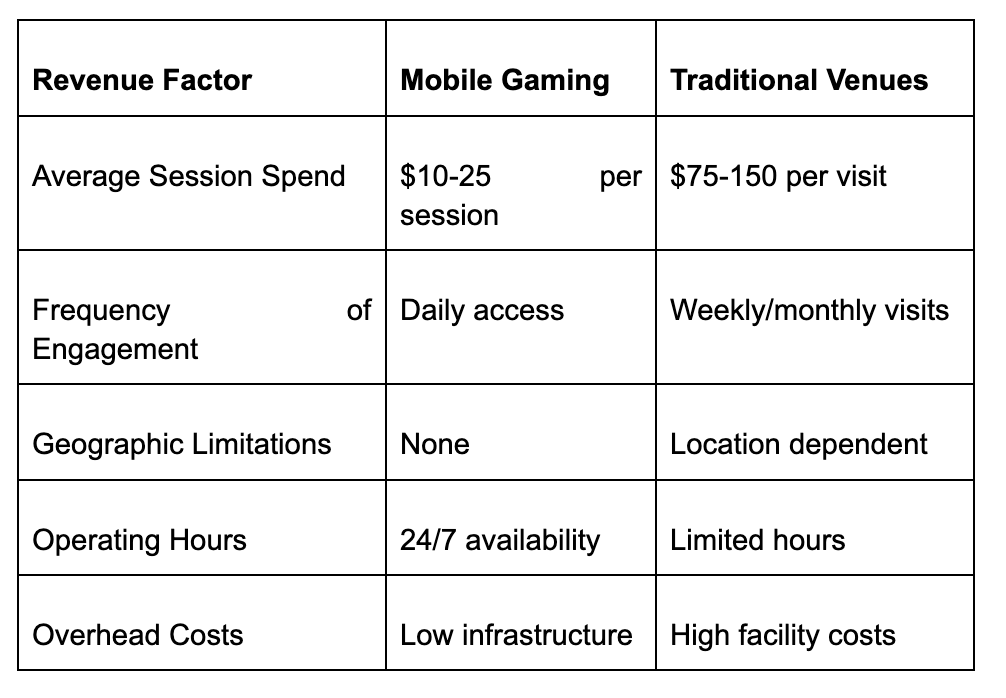
Consumer spending analysis reveals distinct patterns between digital and traditional entertainment consumption. The following table illustrates key revenue characteristics:
Technology Integration Benefits
During 2024, the mass rollout of 5G connectivity, AI-enabled gaming, and enhanced graphics performance further fueled mobile gambling. These technological improvements provide competitive advantages that traditional venues cannot easily replicate through their existing infrastructure.
Advanced technology integration enables personalized experiences, instant gratification, and seamless user interfaces that appeal to contemporary consumer preferences. These features represent significant advantages over traditional venue limitations.
Demographic Shifts and Consumer Preferences
This market expansion is fueled by several factors, including the gaming industry's rapid expansion, an increase in mobile gaming users, the proliferation of smart devices and connections, a rising penetration of internet users, and a growth in social media usage.
Younger demographics demonstrate strong preferences for digital entertainment options that offer convenience, accessibility, and social connectivity features. These preferences challenge traditional venue appeal among key consumer segments.
Social integration capabilities within mobile platforms provide community experiences that complement rather than replace social aspects of physical venues. However, digital communities offer different benefits, including global connectivity and 24/7 availability.
Convenience and Accessibility Factors
Mobile platforms eliminate travel requirements, dress codes, and time constraints that characterize traditional venue experiences. This accessibility particularly appeals to consumers with busy schedules or limited mobility options.
Geographic accessibility represents a significant advantage for digital platforms, enabling participation from locations where traditional venues are unavailable or restricted by regulatory frameworks.
The following accessibility advantages drive mobile platform adoption:
Instant access without travel or scheduling requirements;
No geographic restrictions for participation;
Lower minimum spending thresholds for entertainment;
Private engagement without social pressure;
Customizable experience settings and preferences.
Traditional Venue Adaptation Strategies
Physical venues have implemented various strategies to compete with digital alternatives, including enhanced amenities, integrated technology, and expanded entertainment offerings beyond traditional gaming activities.
Many establishments now offer hybrid experiences that combine physical presence with digital features, creating unique value propositions that pure digital platforms cannot replicate.
Loyalty programs and VIP services provide personalized experiences that leverage the advantages of face-to-face service and customized hospitality offerings.
Enhanced Customer Experience Initiatives
Traditional venues invest in upgraded facilities, diverse entertainment options, and premium service delivery to differentiate themselves from digital alternatives. These investments focus on experiences that cannot be replicated through mobile devices.
Experiential offerings, including live entertainment, dining experiences, and social event,s create comprehensive destination experiences that extend beyond gaming activities.
Customer service excellence and personalized attention remain significant advantages for physical venues, particularly among demographics that value human interaction and premium service delivery.
Industry Coexistence and Market Segmentation
The proliferation of digital technology and internet access has facilitated the rise of online casinos, broadening the market by reaching players who prefer the convenience of remote gaming. This expansion suggests market growth rather than direct substitution between digital and traditional options.
Market segmentation analysis indicates that digital and traditional venues often serve different consumer needs and preferences rather than competing directly for identical market segments.
Cross-platform engagement patterns show many consumers utilize both digital and traditional options depending on their circumstances, social context, and entertainment objectives.
Future Market Evolution
International Game Technology (IGT) announced in February 2024 a USD 500 million investment to expand its mobile gaming offerings in key Asian markets. Such investments demonstrate industry confidence in continued digital growth alongside traditional venue operations.
Technological innovation continues to create new opportunities for both digital platforms and traditional venues to enhance their offerings and reach new consumer segments.
Regulatory developments worldwide will likely influence market dynamics, potentially creating new opportunities for both digital platforms and traditional venues, depending on legislative approaches.
Economic Impact and Industry Transformation
The economic impact of mobile gaming extends beyond direct revenue generation to include job creation in technology sectors, regulatory adaptation costs, and infrastructure development requirements.
Traditional venues maintain significant economic contributions through employment, tourism development, and tax revenue generation that digital platforms may not fully replicate in local communities.
Industry transformation continues as both digital and traditional entertainment options evolve to meet changing consumer preferences while maintaining sustainable business models.
Market analysis suggests continued growth opportunities for both sectors, with success depending on adaptation to consumer preferences, technological integration, and regulatory compliance rather than direct competition for market share.
The relationship between mobile gaming and traditional venues represents industry evolution rather than replacement, with both formats serving distinct consumer needs and contributing to overall entertainment market expansion.